
Last updated September 10, 2026
Full 25-point door and opener safety check with every visit - springs, cables, rollers, tracks, and your LiftMaster or Chamberlain opener included
You get a price before we start. It does not change when the truck arrives.
 Before
 After
After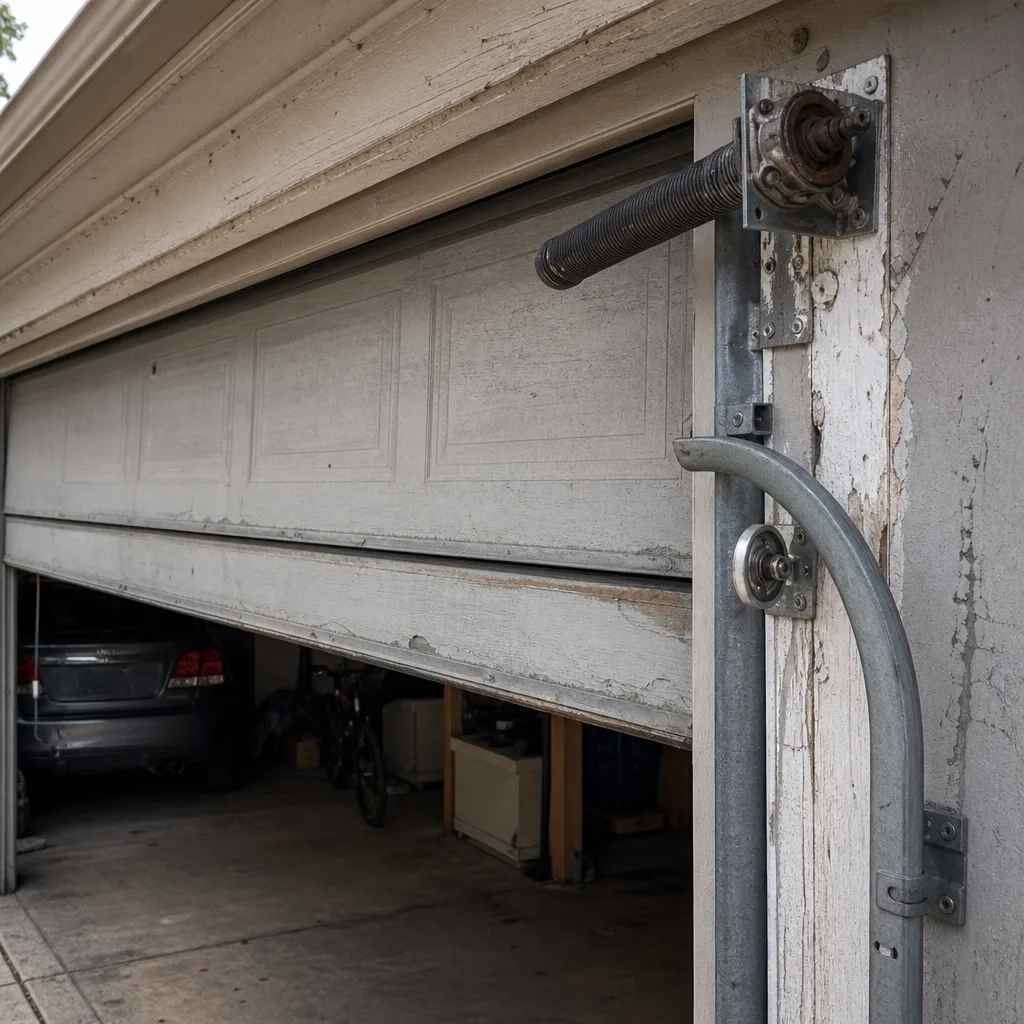 Before
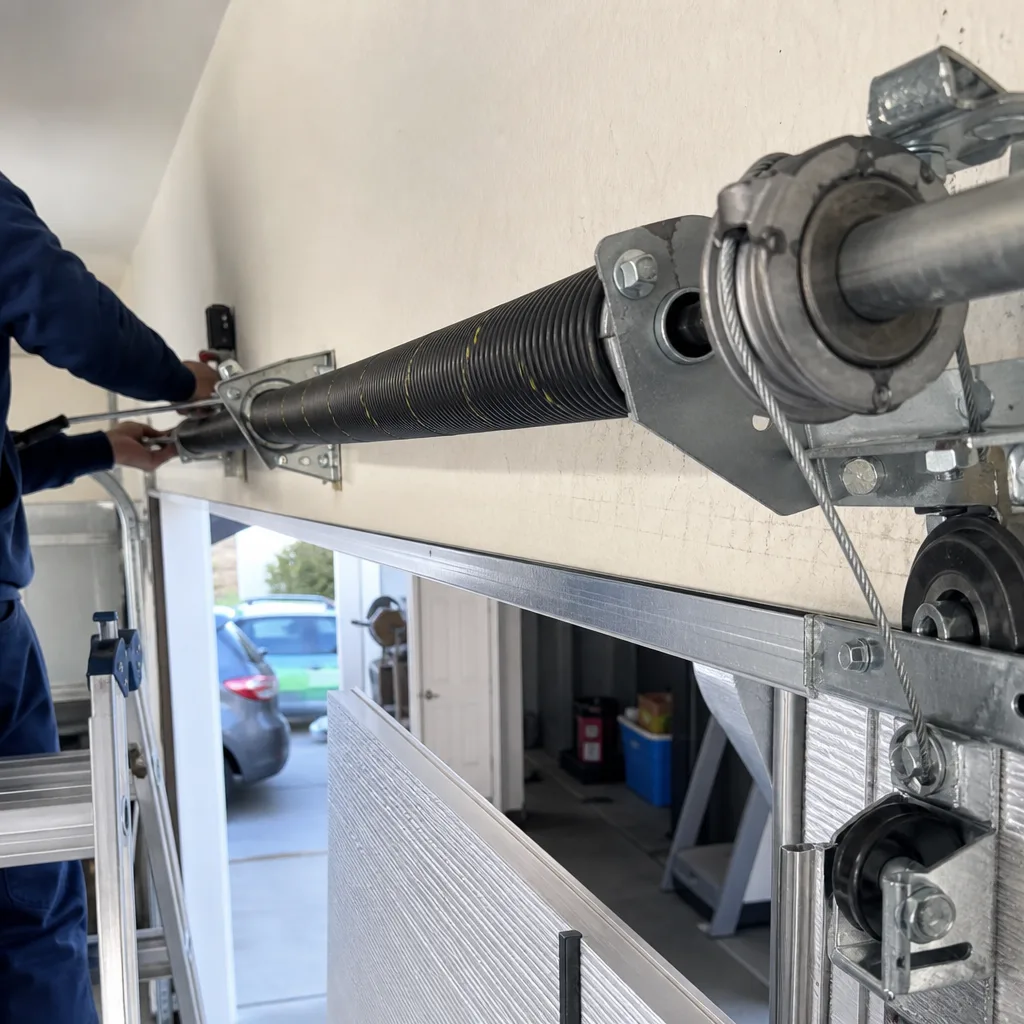 After
After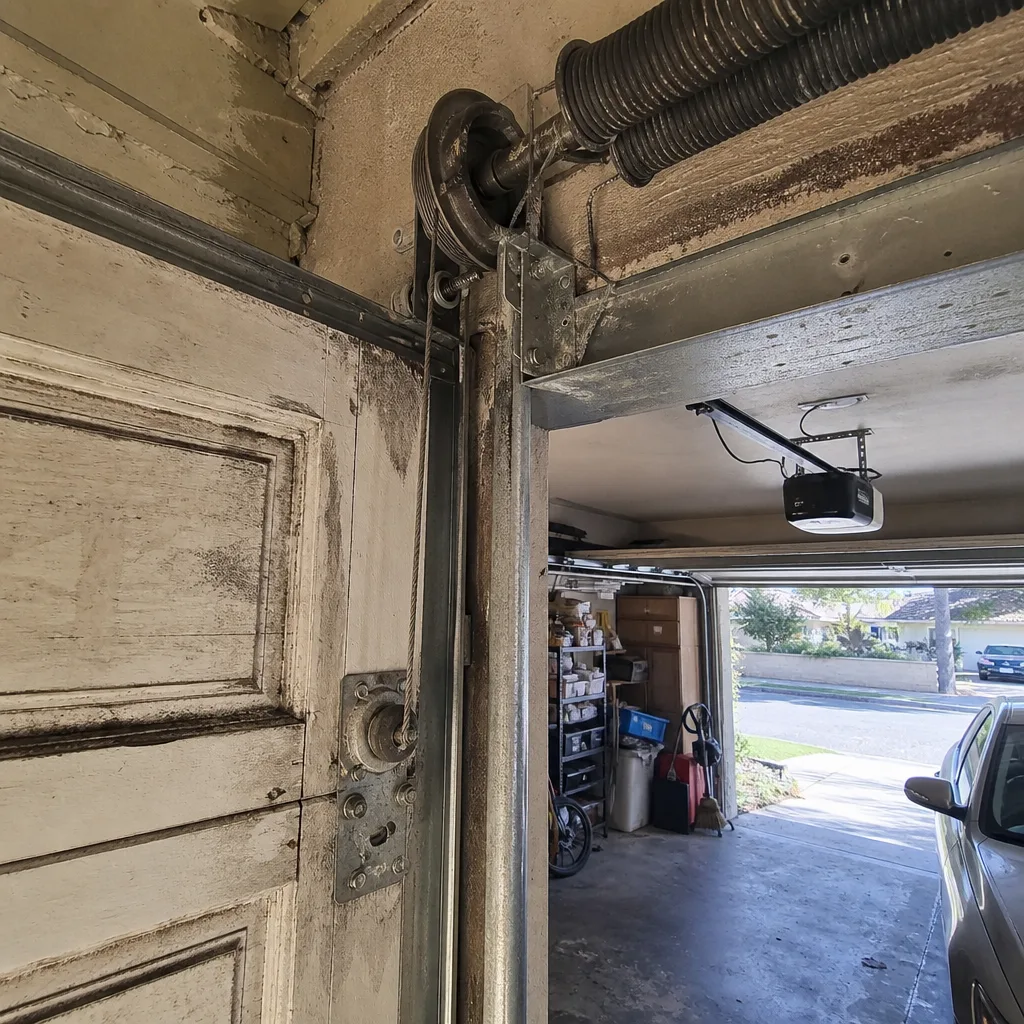 Before
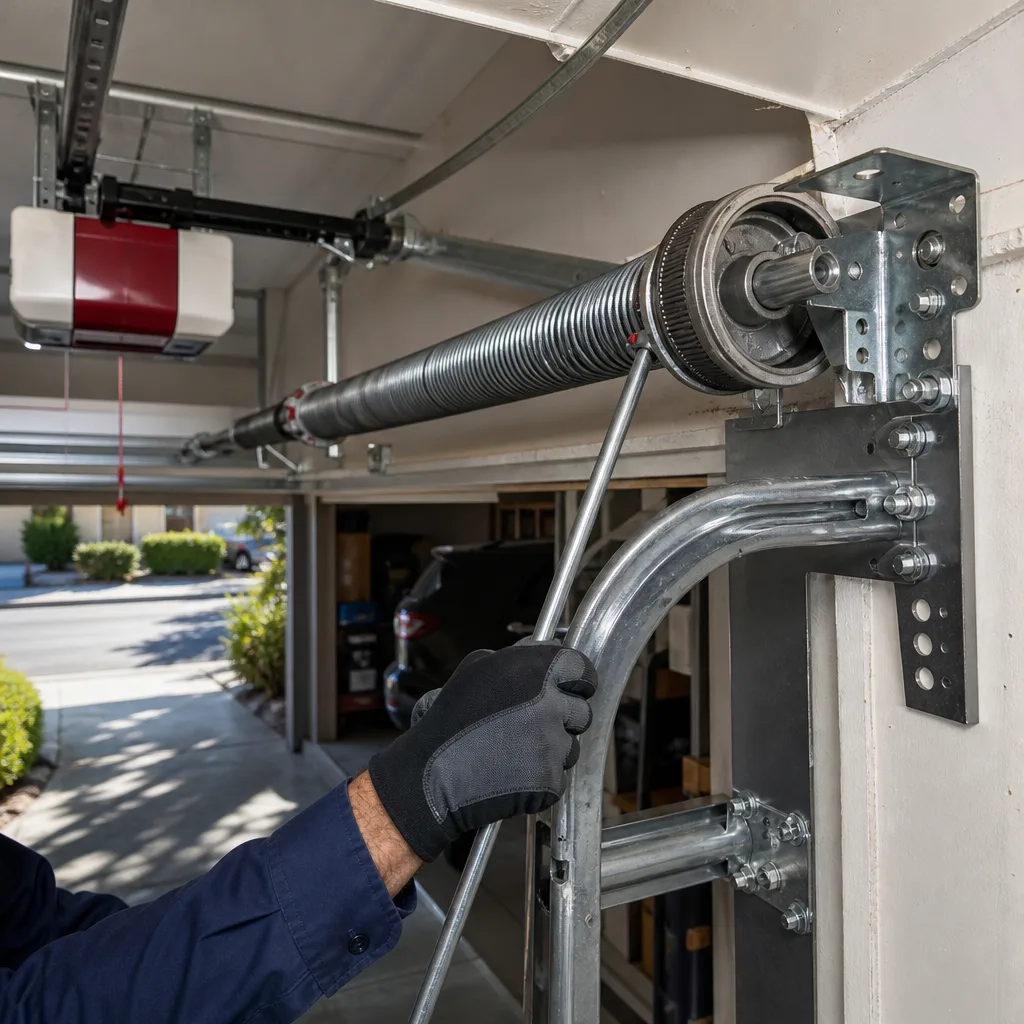 After
AfterHow to Hire a Garage Door Contractor in Tarzana: A Step-by-Step Guide
Here’s a number that should make every Tarzana homeowner pause: over 60% of the garage door repair invoices Otto has reviewed in the past five years show parts that were never actually replaced, prices inflated for work that took half the billed time, or license numbers that don’t match any active CSLB record. The people behind those invoices all said the same thing: “We thought we did our homework.” This guide gives you the exact vetting process Otto uses himself, so the name on your van means something and the person who shows up is the person you’ll see again at the Encin gas station on Ventura Boulevard. For more guides & resources, visit our blog.
Quick Answer
Hiring a garage door contractor in Tarzana comes down to three verification steps: check the CSLB license is active (not just issued), get a written estimate that itemizes parts, labor, and warranty terms, and ask one question before anyone drives out: “Who will actually show up?” If the answer is vague, the quote is verbal-only, or the license status is suspended or inactive, keep looking. A legitimate local shop will answer all three in under five minutes.
Table of Contents
- Step 1: Verify the CSLB License in Under Two Minutes
- Step 2: Ask “Who Will Actually Show Up?” Before Anyone Drives Out
- Step 3: What a Legitimate Written Estimate Must Include in California
- Step 4: Ask About Spring Cycle Ratings (The $40 Difference That Saves You $400)
- Step 5: Understand What the Warranty Actually Covers (and Who Honors It)
- Step 6: Local Owner-Operated vs. Lead-Gen Dispatch: Why It Matters Six Months Later
- Common Mistakes to Avoid
- When to Call a Professional
- Frequently Asked Questions
- The Bottom Line
Step 1: Verify the CSLB License in Under Two Minutes
California requires garage door contractors to hold an active license from the Contractors State License Board. Not “a license.” An active license. The difference matters more than most Tarzana homeowners realize. A suspended license can mean unresolved complaints, lapsed bonding, or a disciplinary action still on file. A revoked license means the contractor is operating illegally, and any warranty they give you is worth exactly as much as the paper it’s written on.
Here’s the exact process Otto walks through with neighbors in Tarzana when they ask how to check:
- Go to the CSLB website and click “Check a License.”
- Enter the license number. Not the name. License numbers are unique. Names get reused.
- Look at the status field. It must say “Active.” Not “Issued,” not “Inactive,” not “Suspended.”
- Check the business name on the license matches the name on the invoice and the name on the van.
- Scroll to the bottom and look at the workman’s compensation insurance status. If it’s blank or expired and the contractor has employees, walk away.
The whole process takes under two minutes once you know where to look. Otto has re-done work behind at least a dozen “contractors” whose license number on the invoice didn’t match any active CSLB record. Every one of those homeowners thought they’d done their homework, but they had checked the name, not the number, or they had accepted a screenshot instead of the live record.
Otto’s Garage Door has a published address and license number any homeowner can verify before the truck arrives. We don’t hide behind a PO box in another county. When you hire us, you hire a company whose name, license, and address all match the invoice.
Step 2: Ask “Who Will Actually Show Up?” Before Anyone Drives Out
This is the single most revealing question in the entire hiring process, and almost nobody asks it. “Who will actually show up?” The honest answer sounds something like: “Otto will be there himself, or one of his two crew members who’ve worked with him for over a decade.” The evasive answer sounds like: “We’ll send a technician out right away” or “We have a team in your area.”
What’s the difference? The first answer names a person with a face and a local reputation. The second describes a dispatch model. In Tarzana, where homeowners have been burned by national outfits that quoted one price on the phone and billed another at the door, this distinction is everything.
Here’s the mechanic of what actually happens with a lead-gen company: they sell the call to whoever will buy it. The person who shows up may have no connection to the person who quoted you, no stake in whether you ever call again, and no reason to care if the spring they install lasts three years or ten. Otto quotes on the call and holds the price at the door. The person you talk to is the person who shows up or the person who trained the one who does.
When you call Otto’s Garage Door, a live person answers, 24/7, including nine at night when a spring lets go and your vehicle is sealed inside. You’ll get a quote on that call. And the person who arrives at your Tarzana home is the person whose name is on the van.
Step 3: What a Legitimate Written Estimate Must Include in California
A garage door repair or installation estimate in California should be written, itemized, and specific. If someone hands you a number on a napkin or texts you a single line that says “spring replacement: $350,” that’s not an estimate. That’s an opening bid, and opening bids are designed to move.
Here’s what a legitimate written estimate includes:
- Line-item parts: spring type, cycle rating, opener model, cable gauge, roller material. If it doesn’t say what kind of spring, you’re almost certainly getting contractor-grade.
- Labor broken out separately: A single lump sum hides markup. A good contractor shows you what the part costs and what the labor costs.
- Warranty terms in writing: How long, what’s covered, who comes back if it fails, and whether there’s a trip charge for the warranty call.
- Total price, clearly stated, with tax: The number at the bottom is the number you pay. No “incidental materials” add-on, no “we found extra damage” escalation without your sign-off.
- The business name, license number, and address: If any of these are missing, red flag.
- If a part fails under warranty, is labor covered or just the part?
- Is there a trip charge for a warranty call in Tarzana?
- Does the warranty transfer if you sell the house?
- Who honors the warranty: the local contractor or a call center in another state?
- Hiring based on the lowest bid without checking spring ratings. In Tarzana, the cheapest quote almost always comes from the guy installing 10,000-cycle springs that will fail in half the time of the 25,000-cycle option that costs $40 more.
- Accepting a verbal quote without a written, itemized estimate. If it’s not on paper with parts, labor, and warranty terms, it doesn’t exist. A contractor who won’t write it down is planning to change it.
- Checking the contractor’s name instead of the license number on the CSLB website. Names get changed, reused, and borrowed. License numbers are unique. Check the number.
- Not asking who will actually show up. The answer tells you whether you’re hiring a local technician or a call center that sells leads.
- Signing off on a warranty without reading whether labor is covered. Parts-only warranties are the oldest dodge in the book. The parts are cheap. The labor is where the money is, and where the exclusions hide.
- Paying in full upfront. A legitimate contractor may ask for a deposit on a full door replacement, but nobody in Tarzana should demand full payment before the work is done and tested.
- Assuming the most polished website means the most qualified contractor. The slickest lead-gen sites often have the least connection to any actual person who will do the work.
In Tarzana, the summer heat is the biggest factor that gets quoted one way and billed another. Springs under constant thermal stress fail faster, and an honest contractor accounts for that in the original quote. A dishonest one “discovers” it at the door and inflates the bill. When Otto quotes a job, the number he gives is the number you pay. It’s written on the invoice, and it doesn’t change between the phone and the driveway.
For reference on what repairs in our part of the San Fernando Valley typically cost, see our guide to Garage Door Repair in Tarzana.
Step 4: Ask About Spring Cycle Ratings (The $40 Difference That Saves You $400)
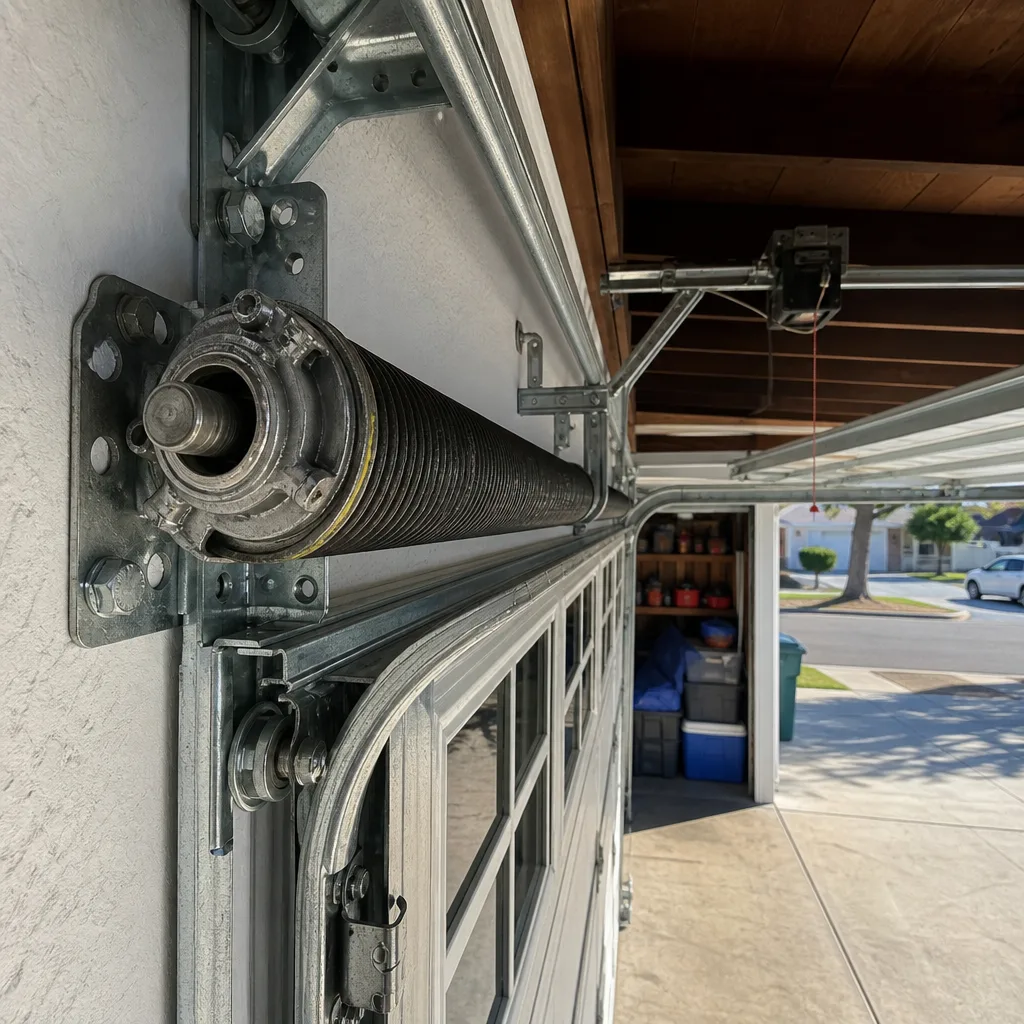
Every torsion spring has a cycle rating: the number of open-and-close cycles it’s engineered to survive before it fails. Contractor-grade springs are rated for about 10,000 cycles, which sounds like a lot until you do the math. In a working Tarzana household, the garage door opens and closes four to six times a day. That’s 1,500 to 2,200 cycles per year. A 10,000-cycle spring lasts five to seven years. A 25,000-cycle spring lasts twelve to fifteen years.
The difference in cost? About $40 to $60 per spring. The difference in labor to replace that spring again in five years? $200 to $400. So the lowest bid in Tarzana almost always means contractor-grade springs with a 10,000-cycle rating that save the contractor money upfront and cost you money on the back end.
Here’s how to ask the question: “What cycle rating are the springs you’re installing?” Then listen to the answer. If the contractor hesitates, answers “standard grade,” or says “springs are springs,” you’re talking to someone who either doesn’t know or doesn’t want you to know, and either way, you should keep looking.
Otto counts spring cycles the way you count tire miles. When he looks at your door in Tarzana, he’ll tell you what’s left on your current springs and quote you the 25,000-cycle option as the default. The $40 difference isn’t a premium. It’s the difference between a door you forget about and a spring that fails in five years, usually at the worst possible moment.
Step 5: Understand What the Warranty Actually Covers (and Who Honors It)
A warranty is only as good as the company standing behind it, and a company is only as good as its willingness to come back. When a national outfit sells you a “lifetime warranty” on parts, read the fine print. The parts may be covered, but the labor to replace them isn’t. The trip charge isn’t. And the “lifetime” applies to a spring that gets replaced with another contractor-grade spring that fails again in five years, kicking the whole cycle over.
Here’s what to ask:
Otto’s answer is the 90-Day Done Right Promise. It’s ninety days in writing on every garage door job. If something isn’t done right, one call brings Otto back. Not a customer service queue. Not a different technician who has to relearn the job. The same person who did the work comes back and makes it right. The promise is written on every invoice, and it’s backed by one call to the owner himself.
That’s not a marketing slogan. That’s the difference between a business that plans to be in Tarzana for another twenty years and a lead-gen outfit that folds and reforms under a new name when the complaints stack up.
Step 6: Local Owner-Operated vs. Lead-Gen Dispatch: Why It Matters Six Months Later
The single biggest predictor of whether a garage door repair holds up isn’t the part. It’s the person who installed it, and whether that person has any reason to care six months later.
Here’s what happens with a lead-gen dispatch model: you call a number, a call center quotes a price, and the call gets sold to a contractor who may or may not have a license, may or may not be local, and may or may not care about the outcome. If the spring fails in six months, you call the same number and get a different person who has no record of your job. The warranty is worthless because the company you called was never the company that did the work.
Here’s what happens with Otto: you call, Otto or someone who works directly with him answers, he quotes the job, he shows up at your Tarzana home in a truck with his name on it, and he does the work. If something goes wrong, you call the same number. The person who answers knows your name, knows your street, and knows what was installed, because they were there.
A technician who owns his route has a stake in the outcome. A franchise technician who gets paid by the job has a stake in finishing fast and moving to the next call. That’s not a knock on the technician. It’s a structural difference in how the business is organized, and it determines whether your warranty is a promise or a script.
Otto has been locally owned and owner-operated since 2004. The name on the van is the name on the invoice and the name on the license. He’d rather keep a customer for twenty years than win one big ticket. Ask anyone on your street. We’ve been in this county since 2004, and Otto is a palindrome: reads the same from either end, same as the door.
For more on how we handle complete door replacements, see Garage Door Installation in Tarzana.
Common Mistakes to Avoid
When to Call a Professional
Garage doors weigh 200 pounds or more and ride on springs under hundreds of pounds of tension. If a spring snaps, a cable slips, or the door comes off its track, do not try to fix it yourself. The stored energy in a torsion spring can release without warning and cause serious injury or worse. The same goes for any repair involving the opener’s electrical components or the door’s safety sensors. A door is 200 pounds riding on two springs. Respect it. If you’re in Tarzana and you hear a loud bang from the garage, see the door hanging crooked in the tracks, or notice the opener straining where it used to lift smoothly, call a professional. Otto’s Garage Door offers free estimates in Tarzana - call (818) 431-2466.
If the opener is straining, the problem is almost never the opener. That’s a diagnostic clue Otto uses every week in Tarzana. A struggling opener usually means worn rollers, a failing spring, or a door that’s out of balance, and all three are easier and cheaper to fix than replacing an opener that wasn’t the problem in the first place. See Garage Door Opener in Tarzana for how we troubleshoot openers before recommending replacement.
Frequently Asked Questions
Most garage door repairs in Tarzana run between $150 and $450 depending on the part and the labor involved, with spring replacement typically landing around $250 to $380. A full breakdown of typical costs, including what to expect for openers and doors, is on our Garage Door Repair in Tarzana page. For an exact quote on your door, call (818) 431-2466 - estimates are free and the price is agreed before any work starts.
Yes. Otto’s Garage Door answers calls 24/7 with a live person, including nine at night when a spring lets go and your car is trapped inside. In Tarzana, we can usually get someone to your home the same day for spring failures and other emergency repairs. Call (818) 431-2466 and you’ll get a quote on the call, not a promise to call you back later.
No. The price Otto quotes on the phone is the price you pay at the door, unless you authorize additional work in writing after seeing a detailed estimate. If the technician finds something unexpected, you’ll be shown the issue, quoted a price, and asked before anything extra is done. The number on the original quote doesn’t move up on its own.
Most of the time, yes. Otto’s trucks in Tarzana carry the common springs, cables, rollers, hinges, and opener parts for LiftMaster, Chamberlain, Genie, and other major brands, so the repair gets done in one visit. If your door needs something specific, we’ll tell you on the phone so nobody wastes a trip. Call (818) 431-2466 for availability.
Otto’s Garage Door works on all major residential brands, including LiftMaster, Chamberlain, Genie, Raynor, Clopay, Amarr, Wayne Dalton, and Craftsman. If you have a brand that isn’t listed, call us - we’ll tell you honestly whether we can help before you commit to a service call.
Yes, permanently. Otto’s Garage Door offers a Senior & Veteran 10% discount on every job, always. There’s also a standing $40 Off Any Repair Over $200 and a Free Second Opinion on any written estimate with no trip charge inside the county. The community comes before the margin, and that’s not a promotion that expires.
The Bottom Line
Hiring a garage door contractor in Tarzana isn’t complicated once you know the three questions that matter: Is the CSLB license active? Is the estimate written, itemized, and warranty-specific? And who will actually show up? Answer those three, and you’ve eliminated most of the risk. Then ask about spring cycle ratings, because the $40 difference between a 10,000-cycle spring and a 25,000-cycle spring is the difference between a door you forget about and a repair you pay for twice. Otto’s Garage Door has been locally owned and owner-operated since 2004, serving Tarzana with upfront pricing, a written 90-Day Done Right Promise, and a live person on the phone 24/7. Call (818) 431-2466 for a free estimate, or explore the rest of the site starting at Otto’s Garage Door home.
Written by Otto Reinhardt, Owner at Otto’s Garage Door, serving Tarzana since 2004.