
Last updated September 10, 2026
Full 25-point door and opener safety check with every visit - springs, cables, rollers, tracks, and your LiftMaster or Chamberlain opener included
You get a price before we start. It does not change when the truck arrives.
 Before
 After
After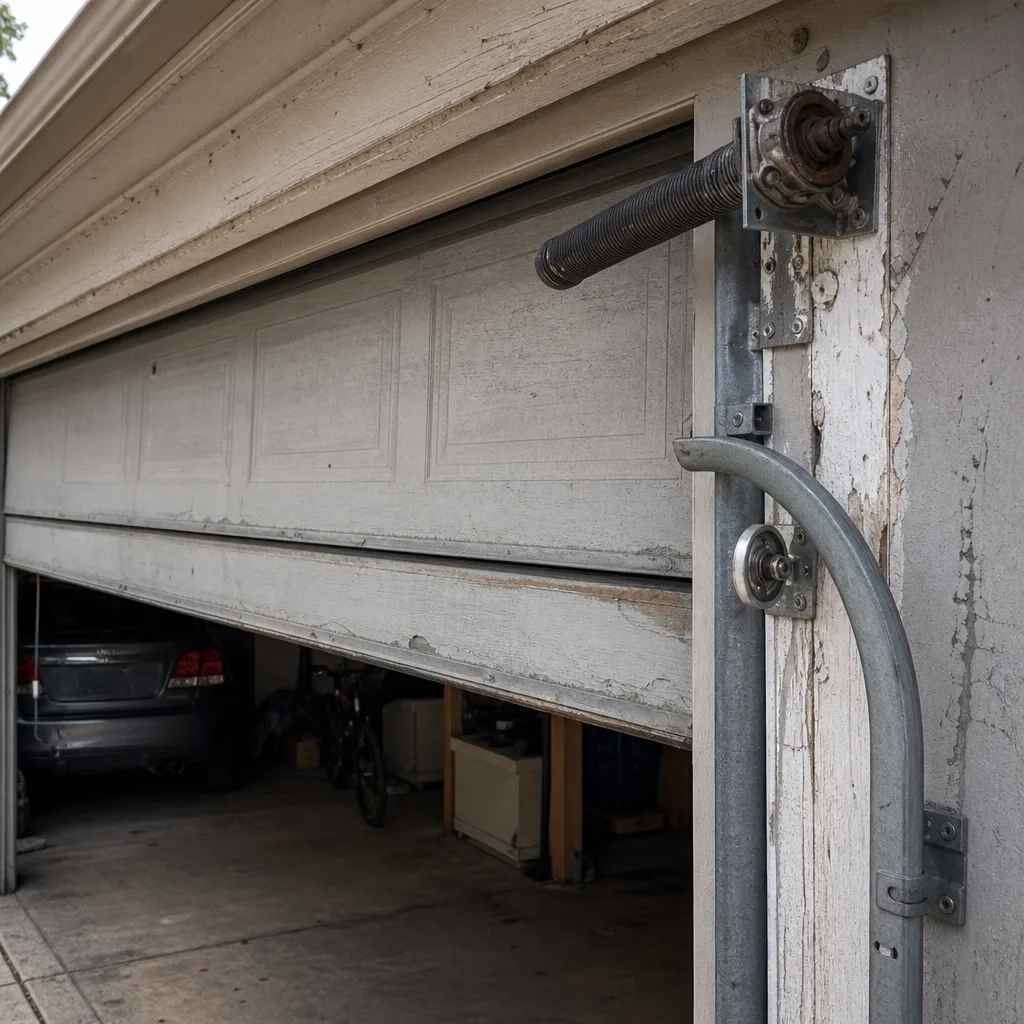 Before
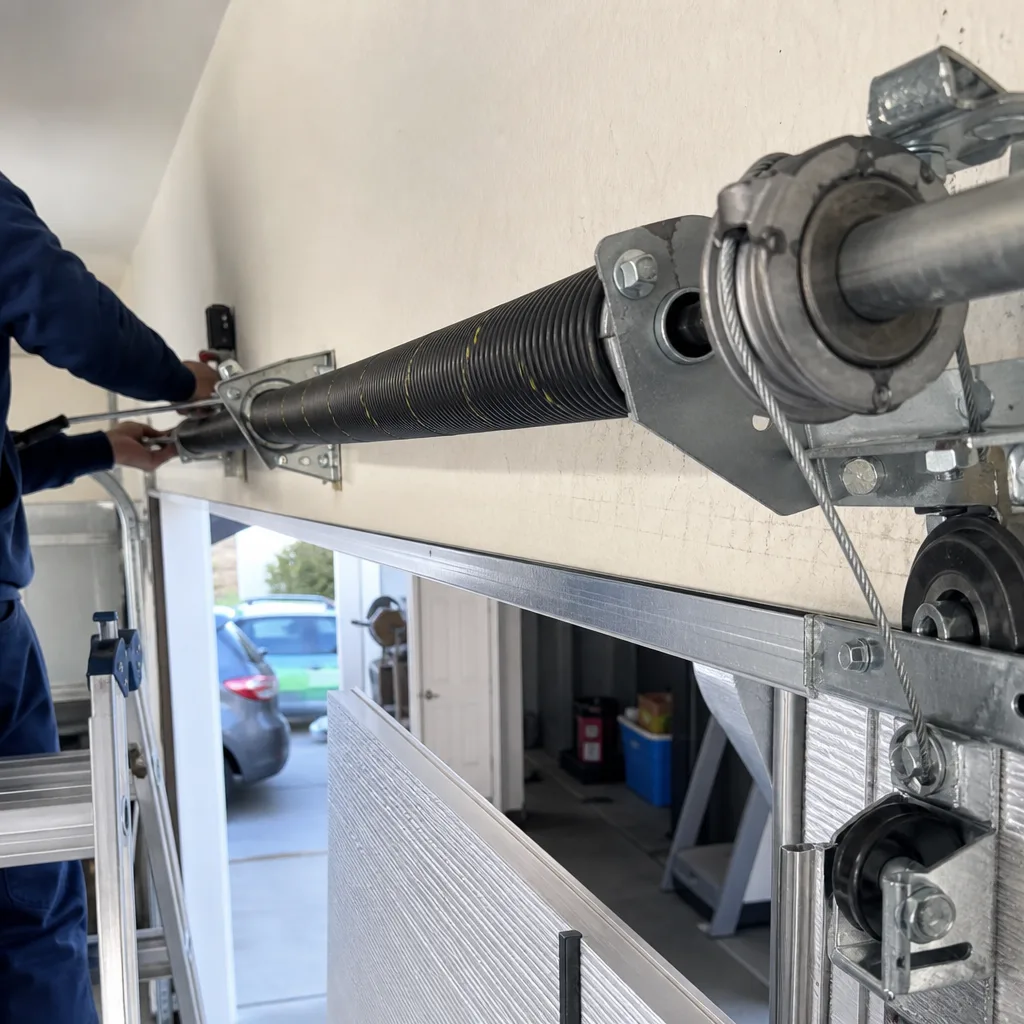 After
After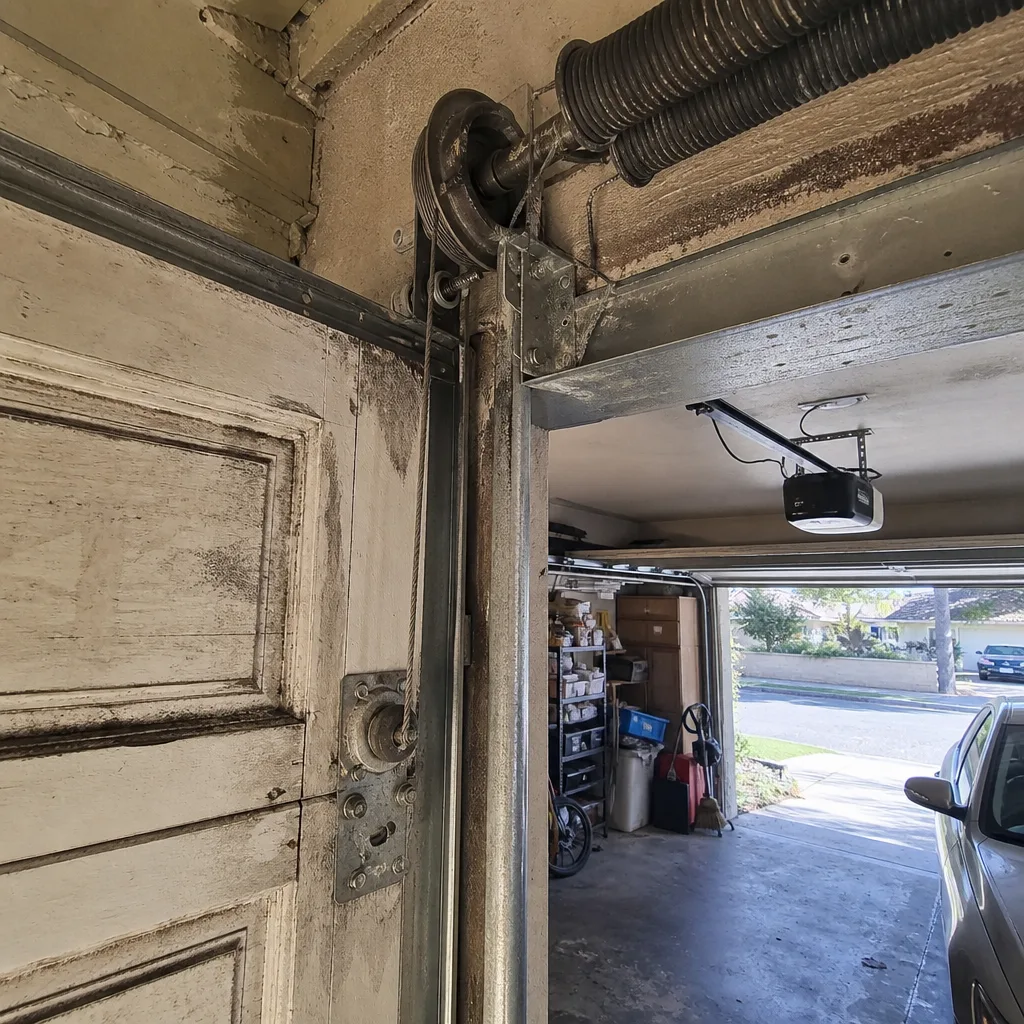 Before
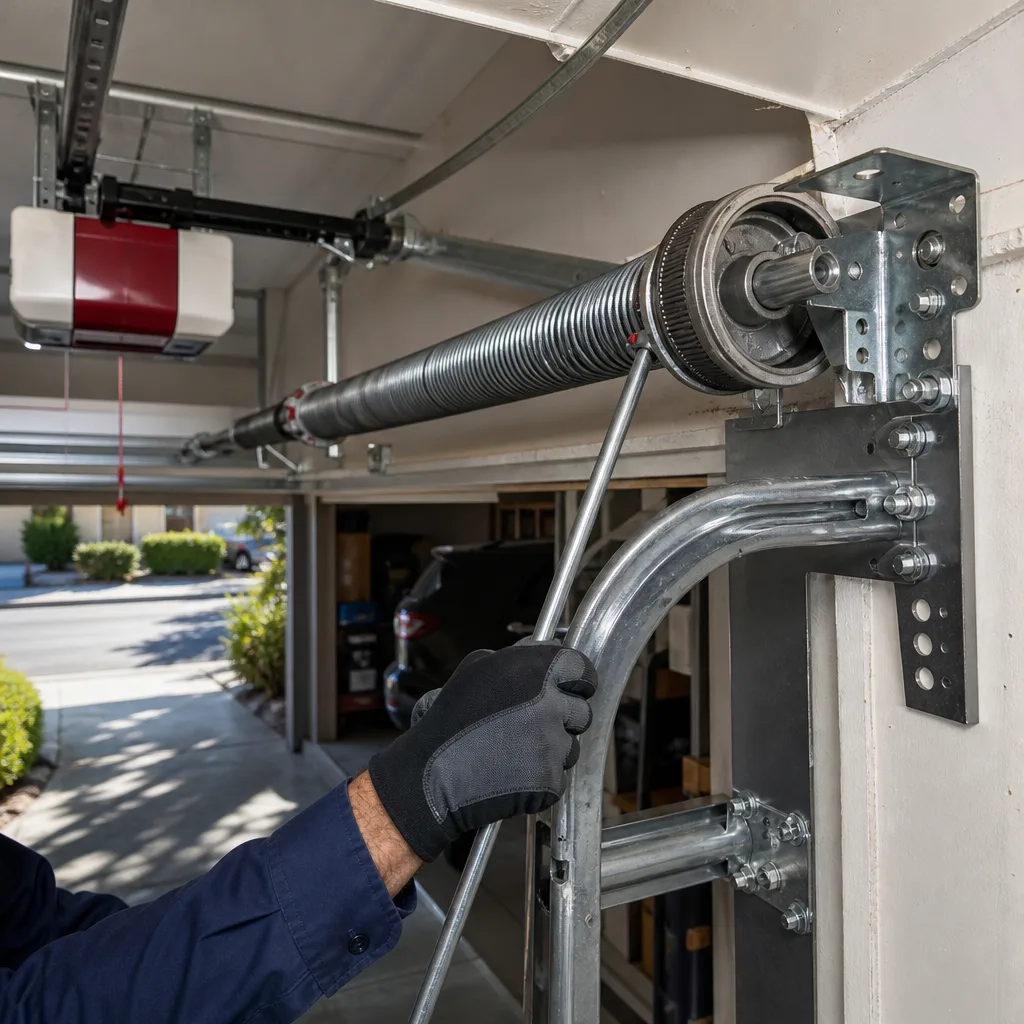 After
AfterGarage Door Repair Maintenance Checklist for Tarzana Homeowners
Half the “emergency” repair calls Otto gets on Monday mornings started as a small noise the homeowner heard on Friday and decided to ignore over the weekend. A squeak becomes a grind, a grind becomes a snapped cable, and by Monday that 200-pound door is sitting crooked in its tracks with your car trapped on the other side. This checklist isn’t a generic printout from a hardware store website. It’s built for Tarzana specifically: the grit that blows off the 101, the July heat that cooks spring steel, and the Santa Ana winds that find every loose bolt on your house. You’ll learn exactly what to check, in what order, what you can safely handle yourself, and what you should never touch without a licensed tech from our Garage Door Repair services standing next to you.
Quick Answer
The most important garage door maintenance tasks for Tarzana homeowners are: a 30-second balance test every month, lubrication of rollers and hinges with a silicone or lithium spray twice a year (never WD-40), tightening all bolts and track brackets before Santa Ana season, visual inspection of springs and cables every 60 days, and an annual professional tune-up that catches tension loss before it becomes a snapped spring. A homeowner can safely do about 70% of this list in under twenty minutes; the other 30% involves parts under enough tension to kill you if they let go.
Table of Contents
- Monthly 60-Second Checks
- The Tarzana Seasonal Maintenance Calendar
- What You Can Touch vs. What Needs a Licensed Tech
- The 30-Second Balance Test That Predicts Spring Failure
- Lubrication: The Right Product for Tarzana’s Temperature Range
- The Documentation Habit That Makes Every Future Repair Cheaper
- What That Noise Actually Means
- Why the Annual Tune-Up Pays for Itself
Monthly 60-Second Checks
Sixty seconds a month. That’s the difference between a garage door that lasts twenty years and one that eats a spring every three. Here’s what to do while you’re waiting for your coffee or letting the dog back in.
Listen first. Run the door one full cycle open and closed. It should sound smooth, almost boring. A grind, a squeal, a thunk, a rattle, any uneven rhythm in the motor: that’s the door telling you something is off. Tarzana’s dry air means hinges lose lubrication faster than you’d think, so a high-pitched squeak is often the first sign.
Watch the door move. It should travel straight, no wobble side to side, no hesitation at any point. If it stutters or looks like it’s working harder at the halfway point, the tracks or springs are fighting each other.
Check the rollers. Look at each roller where it meets the track. Cracked or chipped nylon wheels mean the roller needs replacing before the metal core starts eating into the track. In Tarzana, fine dust from the boulevard settles into the track channels and acts like sandpaper on roller bearings.
Check the weatherstripping. The rubber strip along the bottom of the door and the seals down the sides keep the Valley heat out of your garage on a July afternoon. Cracks, gaps, or brittleness mean your cooling bill is paying for the upgrade.
Test the auto-reverse. Place a roll of paper towels on the ground where the door closes. If the door doesn’t reverse when it hits it, the photo-eye sensors are dirty or misaligned. This is a two-minute fix and a genuine safety item, especially on Tarzana streets with kids and bikes.
The Tarzana Seasonal Maintenance Calendar
Tarzana doesn’t get a real winter, but it gets four distinct stress cycles on a garage door. Here’s what each season actually does to the metal, the cables, and the opener.
January - February: The Cold Snap Months
January nights in Tarzana can dip into the 40s, and that’s cold enough to make spring steel contract and stiffen. The metal shrinks slightly, which increases tension on the torsion spring. If that spring is already fatigued, a cold snap is usually when it snaps. We see more broken springs in January and early February than any other time of year.
Action items:
- Run the door three times in a row on a cold morning and listen for any creaking from the spring itself.
- Check the opener’s force settings. If it’s straining to lift the door in cold weather, the spring is losing tension.
- Inspect the cables for fraying. Cold makes brittle steel wires snap under load.
March - May: The Dry Season
By March the rain has mostly stopped, and Tarzana settles into months of zero humidity. That’s brutal on lubrication. Grease dries out, gets tacky, then collects dust from the 101 corridor. The result is a gummy residue on the tracks that makes the door work harder and the opener burn out faster.
Action items:
- Wipe down the tracks with a clean rag, then reapply a light lubricant to the rollers and hinges.
- Check the opener’s chain or belt tension. Dry air causes slack.
- Clean the photo-eye lenses. Dust film from the Santa Susana pass settles on everything.
June - September: The Heat Spike
A Tarzana summer afternoon can hit 100 degrees without trying. That heat makes metal expand, which changes the door’s balance. A door adjusted in May is not the same door in August. Heat also shortens the life of opener motors, especially if the unit is mounted in an uninsulated garage where ambient temps reach 120 or higher.
Action items:
- Re-run the balance test in July. If the door drops on its own, it was rebalanced in cooler weather and needs adjustment.
- Listen to the motor. Heat makes failing capacitors fail faster. A humming sound that doesn’t start is a dying capacitor.
- Keep the tracks free of caked dust. Heat plus dust equals abrasive paste in the track channels.
October - December: Santa Ana Season
Santa Ana winds hit Tarzana with gusts that rattles doors in their frames. They also carry fine grit from the mountains and the valley floor. If anything on your garage door is loose, these winds will find it. Bolts back out, track brackets shift, and the door starts binding in the track.
Action items:
- Tighten every visible bolt and nut on the track brackets, the hinges, and the opener rail. Use a socket wrench, not a screwdriver.
- Check the seal around the door edges. Gaps let wind-driven dust fill your garage.
- Run the door and watch for any shaking or racking during a windy week. If the door is solid, it won’t move.
What You Can Touch vs. What Needs a Licensed Tech
A garage door is the heaviest moving object in your house. It weighs between 130 and 400 pounds depending on the material and insulation. And all of that weight is held in check by two springs under enormous tension. Respect the door.
Safe to Inspect and Maintain Yourself
- Rollers: You can look at them, clean them, and lubricate the ball bearings. You can also replace non-tension rollers if the door is in the up position and locked in place. But do not remove the bottom roller bracket: that’s under cable tension.
- Hinges: Inspect for cracks and lubricate the pivot points. Replacing a hinge is safe if it’s not the bottom two on each side, which carry more load.
- Tracks: You can wipe them clean and check for loose mounting bolts. You should not bend or straighten a section of track with a hammer. A bent track needs to be replaced by a tech who can realign the whole system.
- Weatherstripping: Fully replaceable by a homeowner. Slide out the old strip and slide in a new one. No tension, no danger.
- Photo-eye sensors: Cleaning and realigning is safe. They’re low-voltage and low-stakes.
Never Touch These Without a Licensed Pro
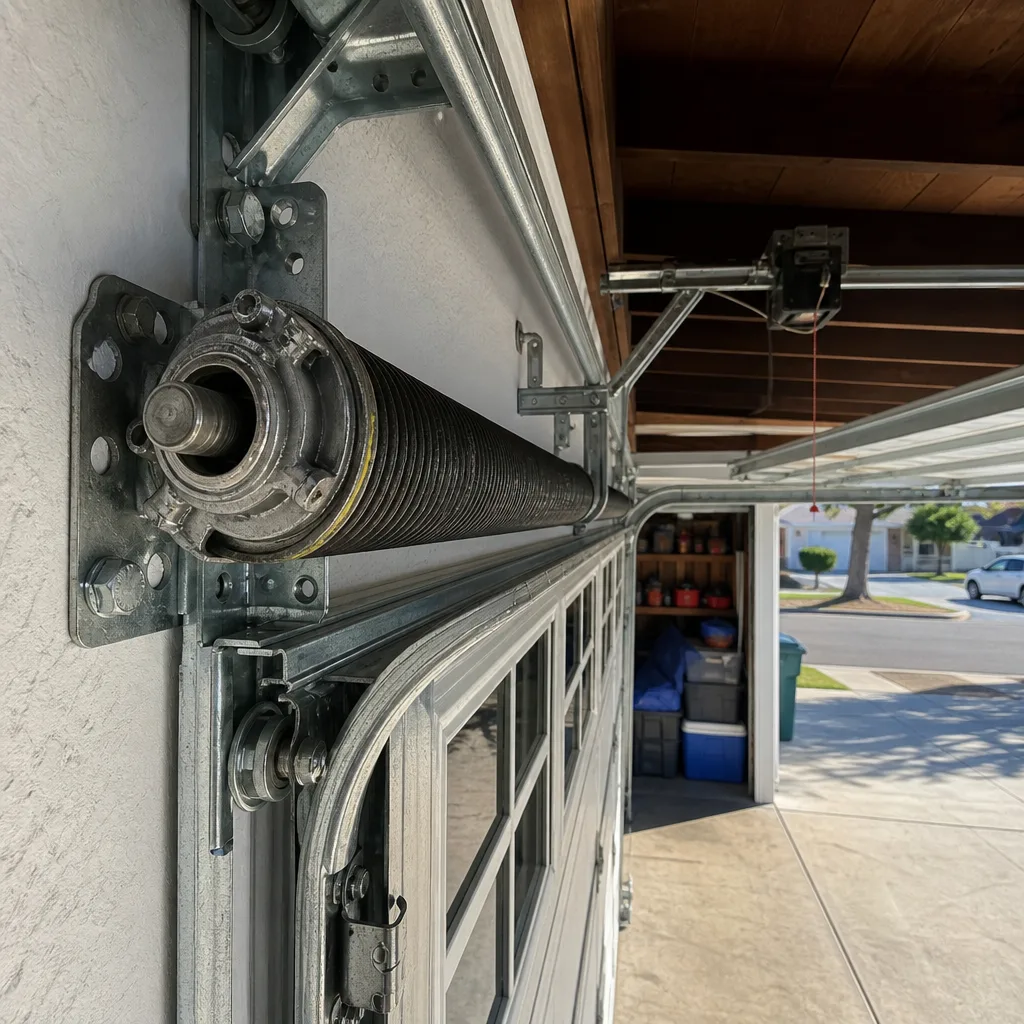
- Torsion springs: These are the springs on the bar above the door. They hold 90 to 140 pounds of torque. If one slips while you’re adjusting it, the winding bar becomes a projectile and the spring becomes a blade. Every year somewhere in the country someone dies trying to wind a torsion spring. Don’t be that person.
- Extension springs: These are the long springs that run parallel to the tracks. When they snap, the broken ends go off like shrapnel. They must have a safety cable threaded through them. If you see one without a cable, call a pro: that’s a code violation and a hazard.
- Cables: The lift cables run alongside the bottom brackets and carry enormous load when the door moves. A frayed cable can sever without warning. Replacing one requires taking tension off the spring, which you don’t want to do yourself.
- Bottom brackets: The bottom corner brackets connect the cables to the door. If these fail while you’re working near them, the door can drop. A 200-pound door falling off its tracks has killed people.
- The opener’s logic board and capacitor: The capacitor holds a charge even when the opener is unplugged. It can shock you. The logic board is sensitive and expensive. Replace the whole opener rather than messing with internals.
If you’re ever unsure which zone you’re standing in, call us. The phone is answered by a live person around the clock, and Otto quotes the job on the call. We’d rather tell you “that’s a DIY fix, go ahead” than have you hurt yourself learning the difference the hard way.
The 30-Second Balance Test That Predicts Spring Failure
Springs don’t usually snap without warning. They lose tension gradually over thousands of cycles, and the door’s balance is the tell. A balanced door means the springs are doing their job. A door that’s heavy to lift means the springs are dying, and they’re taking the opener motor down with them.
Here’s the test. It takes thirty seconds and tells you more than any inspection can.
- Close the door completely. Make sure the opener is in the unlocked or manual mode. Pull the red release cord so the door moves by hand.
- Lift the door about three feet off the ground. Use the handle or the bottom edge. It should come up smoothly without much effort.
- Let go. The door should stay right where you left it, roughly three feet up. It might drift an inch up or down, but it should not fall.
- If it drops: The springs are losing tension. The door is now too heavy for the springs, which means the opener is lifting the extra weight every cycle. That’s like driving with your parking brake on.
- If it shoots up: The springs are over-tensioned. Less common in Tarzana’s dry climate, but it happens after a DIY adjustment gone wrong.
- Repeat at the halfway point and at the top. The door should be roughly neutral at any position. A properly balanced door feels almost weightless.
Do this test monthly. A spring that’s losing tension will give you weeks of warning in Tarzana’s heat, because the door’s balance shifts more noticeably when temperatures swing. If the door drops more than six inches when you let go, call us. That spring is done, and the longer you run it, the more strain you’re putting on the opener. A new spring is a few hundred dollars. A new spring and a new opener because the spring killed the motor is a much bigger check.
For a deeper dive into what spring failure looks like and what it costs to fix, see our full page on garage door repair in Tarzana.
Lubrication: The Right Product for Tarzana’s Temperature Range
The wrong lubricant is worse than no lubricant. We cannot tell you how many garage doors we’ve seen in Tarzana where someone sprayed WD-40 on the tracks, the springs, the hinges, everything, and called it maintenance. Here’s the truth: WD-40 is not a lubricant. It’s a water displacer and a solvent. It cleans, then it evaporates, and it leaves a residue that collects the 101’s dust into a gummy paste. Within two weeks, the door is grinding worse than before.
For Tarzana’s temperature range, which swings from the 40s on a January night to 110 in an uninsulated garage on an August afternoon, you need a product that stays stable and doesn’t run off or gum up.
What to Use
- White lithium grease: Best for the metal-to-metal contact points: hinges, brackets, the torsion spring coils, the opener rail. It’s thick enough to stay put but doesn’t hold dust the way axle grease does.
- Silicone spray with PTFE: The right choice for rollers with nylon wheels, track channels, and weatherstripping. It dries clean, doesn’t attract dust, and handles temperature swings well.
- Garage door-specific lubricant: You can buy a spray labeled specifically for garage doors at any hardware store. Most are lithium or silicone based. Check the label. If it says “penetrating oil,” you bought the wrong can.
What to Never Use
- WD-40: Solvent, not lubricant. It will clean the grease off and leave the moving parts dry and squealing.
- Axle grease or bearing grease: Too thick for garage door components. It becomes a dust trap in Tarzana’s dry season and the door ends up wearing out faster.
- Motor oil: Runs off in summer heat, collects dust, and stains the driveway every time it drips.
- Cooking spray: We’re not joking. We’ve seen it. It goes rancid, attracts insects, and does nothing for the metal.
How to Lubricate Correctly
- Wipe down the parts first. If you lubricate over old, caked-on debris, you’re sealing the grit in.
- Apply sparingly. Two short sprays on each hinge pivot, one on each roller bearing, and a light coat along the spring is all you need. More is not better; it’s a mess.
- Run the door up and down once to work the lubricant through the moving parts.
- Wipe away any drips or overspray from the tracks. The door should glide, not swim.
Do this twice a year. Spring and fall work well for Tarzana: one lube as the dry season starts, one as the wind season approaches. Ten minutes, two cans, and you’ve extended the life of every moving part on the door.
The Documentation Habit That Makes Every Future Repair Cheaper
Here’s a habit that costs you nothing and saves you money on every garage door call for the rest of your life: photograph the serial plate and write down the install date.
Every garage door has a manufacturer’s label, usually on the inside of the door panel or on the track. It lists the brand (Clopay, Amarr, Wayne Dalton, and the rest), the model, and the serial number. The opener has its own data plate on the motor housing: LiftMaster, Chamberlain, Genie, whatever you’ve got. Take a picture of both with your phone and save them to a dedicated album or a note.
Why this matters in practice: when something breaks and you call for a repair, the first question the tech asks is “what kind of door is it?” If you can answer with a photo, the call is shorter, the diagnosis is faster, and if we need to order a part, we know whether it’s on the shelf or needs to come from the manufacturer. On a repair call, we carry the most common parts for Clopay and LiftMaster doors because those are what we see most in Tarzana. But if your door is a less common model, knowing the serial number ahead of time means we show up with the right part the first time instead of making two trips.
The other piece of documentation that saves you money: write down the date of every repair or service, who did it, and what was replaced. Springs have a cycle rating, usually 10,000 to 20,000 cycles. If you know exactly when your springs were installed, anyone can estimate how much life is left. If you don’t, we’re guessing. And “I think it was around 2017” is not a date.
Keep the photo, the install date, and the repair history in one folder on your phone. The next time something goes wrong, you’ll have everything in hand before you even pick up the phone. Which means the person who answers gets you to a solution faster, and you’re back to your day. That’s the easiest maintenance tip on this list, and the one almost nobody does.
If you’re starting from scratch with a door that’s already a decade old and undocumented, that’s fine. We can identify the door and the opener on the first visit. And if you’re thinking about a full replacement anyway, check out our guide on garage door installation in Tarzana to understand the options.
What That Noise Actually Means
Noise is the door’s language. Before you can fix anything, you have to know what you’re hearing. Here’s a quick decoder for the sounds Tarzana garage doors make most often, from the ones you can ignore to the ones that mean stop using the door until it’s fixed.
Squeal or High-Pitched Squeak
A squeal means a metal part is moving against another metal part without lubrication. The usual suspects: hinge pivots and roller bearings. The fix is the lubrication routine above. If the squeal persists after lubricating, the roller bearing is shot and the roller needs replacement.
Rattle or Chatter
Loose bolts, usually on the track brackets or the opener rail. The Santa Ana winds accelerate this. Go around with a socket wrench and tighten everything you can see. If the rattle is coming from inside a panel, the door’s internal structure may be separating, which is a bigger problem and a sign the door is nearing the end of its life.
Grinding or Scraping
Metal scraping on metal. This is serious. The most common cause in Tarzana is a roller that’s seized and is now dragging its flat side along the track. Every cycle that grinding continues, the track gets deeper and the repair gets more expensive. If the grinding is from the center of the door, it could be the spring itself grinding against the shaft. Either way, stop using the door and call a tech.
Popping or Snapping
If you hear a loud pop from above the door followed by a bang, that was a torsion spring breaking. The door is now dead weight. Do not try to open it manually, and do not run the opener. The opener may still try to lift the door, and you’ll burn out the motor in seconds. Call us immediately. A live person answers the phone 24/7, even at nine at night when your vehicle is sealed inside the garage.
Humming Without Movement
The opener motor is running but the door isn’t moving. If the light on the opener blinks, the photo-eye sensors are misaligned or blocked. If there’s no light and just a hum, the capacitor is dead or the gear is stripped. Either way, the opener needs attention. We work on all major brands including LiftMaster, Chamberlain, and Genie. See our garage door opener service page for Tarzana for more on what goes wrong and what it costs to fix.
Creaking During Temperature Changes
This one is seasonal and often benign. Tarzana’s cold January mornings make the metal contract, and you hear a creak on the first cycle. If the creak goes away after the door runs once and the balance test still passes, it’s just the metal doing what metal does. If the creak is constant, you’re back to the lubrication checklist.
Why the Annual Tune-Up Pays for Itself
Once a year, the whole system should get a professional once-over. Not because a checklist can’t catch things. It can catch a lot, and our more guides & resources can help. But a licensed tech has seen a thousand doors in Tarzana and knows what a fatigued spring sounds like before it becomes a broken spring in your driveway at 6 a.m. That’s the difference between a $129 service visit and a $400 emergency call with a car trapped inside the garage.
Here’s what an annual tune-up actually includes, so you know what you’re paying for.
- Spring tension measurement: We check how many cycles your springs have left based on the wire gauge, the inside diameter, and the install date. Springs die on a schedule. You can plan for it or you can let it plan for you.
- Cable inspection: Cables fray where they wrap around the drum and where they attach to the bottom brackets. We see stress on these points in every Tarzana door after a few years of heat cycling.
- Track alignment and torque check: Every mounting bolt gets tightened to spec. Tracks that have shifted are realigned so the door isn’t fighting itself.
- Opener force and limit testing: The opener should not be lifting more than the door’s actual weight. Adjusting the force settings to match the spring’s current tension saves the motor.
- Safety reverse test: The auto-reverse and the photo-eye sensors get tested with actual obstruction. This is a safety feature, not a convenience, and it should be verified every year.
- Lubrication: Done with the correct product for the door’s materials and the local climate, not whatever can was on sale at the auto parts store.
If you do the monthly and seasonal checklists, your annual tune-up is faster and less likely to find surprises. But skipping the annual check and relying on the DIY list is like skipping the dentist and only brushing at home: it mostly works, until it doesn’t.
Common Mistakes to Avoid
- Spraying WD-40 on everything. It’s a solvent, not a lubricant. It strips the grease off your hinges and leaves them drier than before. Within two weeks in Tarzana’s dust, the door sounds worse than when you started.
- Tightening the torsion spring yourself. This is the one that puts people in the hospital. The spring is under enough tension that a slipping winding bar can break bones or worse. If the door is heavy, the springs need replacement, not a YouTube adjustment.
- Ignoring a noisy door because “it still works.” A door that works while making noise is a door that’s wearing itself out. The noise is the early warning. The longer you wait, the more parts you replace.
- Replacing the opener when the spring is the problem. If the door is heavy and the opener is straining, the opener is not the problem. The spring is. Yet we see homeowners in Tarzana replace a perfectly good opener every week because the door got heavy and they assumed the motor was failing. If the opener is straining, the problem is almost never the opener.
- Lubricating the tracks. The tracks don’t need lubrication. The rollers need it. Lubricating the track channels just creates a paste with the dust that the wheels then drag through. Wipe the tracks clean and leave them dry.
- Doing a repair with the opener still engaged. If you’re doing any manual work on the door, pull the red release cord first. A door that suddenly opens under opener power while you’re working on it is a trip to urgent care.
- Thinking maintenance is someone else’s job. You live with the door every day. You hear it when it changes. No tech can hear that from across town. The homeowner who pays attention catches problems months before the homeowner who doesn’t.
When to Call a Professional
If any of these apply, stop what you’re doing and call. The door is stronger than you are, and the parts that fail are the parts under the most tension.
- The balance test fails and the door drops more than six inches when you release it.
- You see a visible gap or separation in a torsion spring, or a broken cable strand anywhere.
- The door is making a grinding noise that wasn’t there last week.
- The opener is humming but nothing moves.
- The door is off its track or sitting crooked in the opening.
- You’re not sure what’s wrong, but something feels wrong. Trust that. You know this door better than anyone.
Otto’s Garage Door offers free estimates in Tarzana. Call (818) 431-2466 and a live person answers, day or night. We quote the job on the call and hold that number when we show up. No dispatch center, no call-back three days later, no price that changes between the phone and the driveway. If you’ve got a written estimate from another company, bring it: our free second opinion will tell you if you’re getting a fair deal or getting taken for a ride.
And for anything urgent, we’re here around the clock. A spring that snaps at 9 p.m. on a Sunday with your car sealed inside the garage is exactly the kind of call we built this business on. The name on the van is the same name on the invoice and the license.
Frequently Asked Questions
Twice a year is right for Tarzana’s climate, once in early spring as the dry season starts and once in October before the Santa Ana winds arrive. Use white lithium grease on the hinges and spring, and a silicone spray with PTFE on the rollers and weatherstripping. Never use WD-40: it’s a solvent, not a lubricant, and it leaves moving parts drier than before.
No. Torsion springs are under 90 to 140 pounds of torque, and a slipping winding bar can break bones or kill. Extension springs snap like shrapnel and must have a safety cable threaded through them. Spring replacement is a job for a licensed tech who carries the right parts and knows exactly how to release and re-tension the system safely. See How to Hire a Garage Door Contractor in Tarzana: A Step-by-Step Guide to know what to look for. Call (818) 431-2466 for an exact quote, and the price is the same when we arrive.
With regular maintenance, a steel garage door in Tarzana lasts 20 to 30 years. The springs are the replaceable wear item: standard torsion springs are rated for about 10,000 cycles, which in a home that cycles the door twice a day works out to roughly 7 to 10 years. Heat and dust from the 101 corridor can shorten that if the door isn’t lubricated regularly. The door itself outlasts the springs several times over, so don’t replace the whole door when a spring breaks.
The 30-second balance test tells you. Pull the release cord, lift the door to about three feet, and let go. If it drops, the springs are losing tension. Other signs include a door that’s noticeably heavier to lift by hand, an opener that strains or hesitates, and a visible gap in the spring coil. Spring fatigue is gradual, which means you get warning signs before a sudden snap if you’re paying attention.
Yes. An annual tune-up costs roughly a third of what a typical emergency repair costs, and it catches spring fatigue, cable fraying, and track misalignment before they become a stranded car and a bigger bill. The homeowners in Tarzana who do an annual check get 25 to 30 years out of a door instead of 15. Call (818) 431-2466 to schedule one and get a free estimate upfront.
That’s a broken torsion spring. The door is now dead weight, and the opener will burn out its motor trying to lift it. Don’t run the opener, and don’t try to lift the door manually. Call us right away at (818) 431-2466: a live person answers 24/7, including nights and weekends, and we’ll quote the repair on the call. We carry common spring sizes for Clopay, LiftMaster, and other brands we see across Tarzana, so we’re usually able to do the repair in one visit.
The Bottom Line
A garage door in Tarzana needs about twenty minutes of attention a month and two lubrication sessions a year to stay healthy. The balance test tells you when your springs are failing before they snap. The right lubricant keeps the heat and the 101’s dust from grinding your hardware down. The documentation habit means every future repair is faster and cheaper. And the annual tune-up catches what a homeowner’s eye can’t. Do the checklist, respect the springs, and call a licensed tech the moment something feels heavier than it should. Your door will outlast the house, and the person who shows up to fix it will be the same one who answers the phone. Start with the free estimate at (818) 431-2466, or see the Otto’s Garage Door home page if you’re new here.
Written by Otto Reinhardt, Owner at Otto’s Garage Door, serving Tarzana since 2004.